Choosing a skirt length can feel like a tiny decision with a surprisingly big effect. A hem that lands just below the knee may feel polished; a midi hem can brush the widest part of the calf. But height alone cannot decide what looks balanced. Leg length, torso proportions, shoes, and the skirt’s shape all matter. There is no magic number.
The SizeUSA national body-scan study, conducted by TC², recorded measurements from more than 10,000 U.S. adults. It documented varied body proportions, not a universal formula for skirt hemlines. That distinction matters. Measurements can inform fit, but they cannot tell you which length feels right when you sit, climb stairs, or walk briskly. Fashion designer Oscar de la Renta’s widely quoted advice, “Fashion is about dressing according to what’s fashionable. Style is more about being yourself,” offers a useful reminder: proportion is personal, too.
So, what length skirt should i wear for my height? This guide turns that question into practical checks, not rigid rules. Compare mini, knee-length, midi, and maxi hems in a full-length mirror. Notice where each edge meets your leg, then try the same skirt with flats and a modest heel. Small changes can shift the whole silhouette. And sometimes the “best” length looks less convincing in a mirror than it feels in motion. That is worth noticing. A little trial and error is normal.
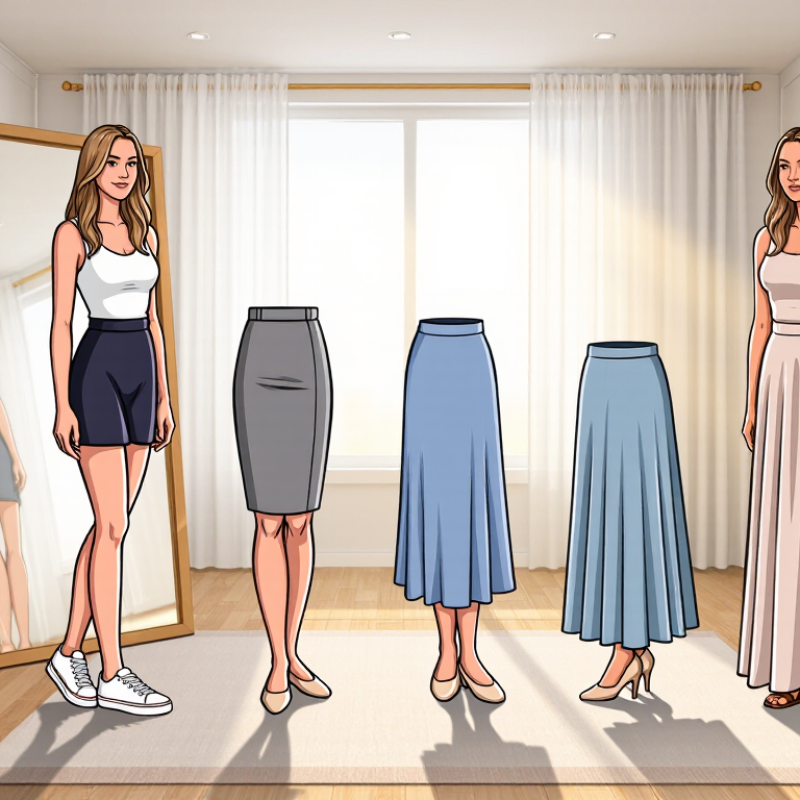
Height influences skirt length through proportion, not through a strict set of rules. On a shorter frame, a hem near the knee can leave more leg visible and create a longer-looking line. A midi skirt may feel more balanced when its hem sits above the widest part of the calf. Taller wearers often have more room for longer hems, though fabric and footwear still matter. Try it on.
Tip: Check the hem in a full-length mirror, then walk and sit. A skirt that looks balanced while standing may bunch or shift when you move. The waist position matters, too: a high waist can change where your legs seem to begin. Small adjustments count.
For petite heights, a skirt ending just above the knee can feel easy to style; for taller heights, that same cut may read much shorter. These are tendencies, not rules. Compare two lengths with the same shoes and top, so the hem is the main difference. Notice where the fabric breaks your silhouette. It is easy to overvalue height and overlook personal comfort. A slightly uneven hem or unexpected proportion may still feel right—fit is not a math problem.
Before choosing a hemline, measure your proportions in bare feet. Stand naturally, and find your waist by bending gently to one side; the crease usually marks it. Measure from your waist to the floor, then from your waist to your knee and mid-calf. Keep the tape straight, but do not pull it tight. Write down each number. A small change in posture can shift a measurement, so repeat it once. These figures help you compare skirt lengths with your leg proportions, rather than relying on height alone.
Tips: Measure over thin clothing. Note where your knee sits. Compare hems with the shoes you plan to wear. Keep the tape level. A mirror helps.
Use your measurements to estimate where a hem will fall, then check the skirt on your body. A hem near the knee may feel balanced on one person and awkward on another; torso length, footwear, and personal comfort all matter. For a mid-calf style, check that the fabric does not end at a spot that feels visually abrupt to you. Sit, walk, and look from the side. Measurements are useful, not exact rules. If the tape slips or your posture changes, the result may be a little off. Remeasure before making a final choice.
Choose the silhouette you want before choosing a hemline. A high waist and an above-knee hem can show more leg. A midi ending near the narrow ankle may create a longer, calmer line. Neither effect is guaranteed. Fabric matters: a soft, draping skirt falls differently from a crisp, structured one.
The CDC’s 2015–2018 NHANES anthropometry report gives the average height of U.S. women aged 20 and older as 161.5 cm. Treat that figure as context, not a hemline prescription. ASTM International’s women’s sizing standards use body measurements across sizes, underscoring why height alone cannot predict fit. Check the skirt’s waist and hip measurements, then note where its hem lands on your own legs.
For a straighter silhouette, try a skirt that skims rather than grips the hips, with a hem near or below the knee. To emphasize the waist, tuck in a fitted top and test a high-rise cut; a wide waistband can feel bulky, though. Stand, sit, and walk in the skirt before deciding. Pinning the hem temporarily can help you compare lengths in natural light. A few centimeters can change the balance.
A skirt’s hem may look different once you put on your shoes. Heels can lift your posture, but they do not automatically make every skirt length more flattering. A low-contrast shoe, close in color to your skin or tights, can create a longer visual line. With a midi skirt, try shoes that leave some of the foot visible rather than cutting across the ankle. But comfort matters; an uncomfortable shoe can change how you stand and walk. Try the outfit in natural light. Small shifts count.
Waist placement also changes the proportions you see. A skirt worn at your natural waist can make the legs appear longer, especially when the top is tucked in. A lower waistband may lengthen the torso instead, which can feel more balanced on some bodies. I used to assume a higher waist always added height, but a bulky waistband sometimes made my outfit look shorter. Check the skirt from the side, too. Sit, walk, and notice whether the waist stays in place or bunches. There is no single ideal length; the hem, waistband, shoes, and your comfort all work together.
| Tip | Height guide | Skirt length to try | Shoes and waist placement | Why it can work |
|---|---|---|---|---|
| 1. Choose a mini with a balanced hem | Any height; especially easy to adjust for petite frames under 5 ft 4 in (163 cm). | About 16–20 in (41–51 cm), measured from the waistband to the hem; adjust for your preferred coverage. | A higher natural waist and shoes close to your skin tone can create a longer-looking leg line. Flat shoes keep the look casual. | A shorter hem shows more leg, while the waist position helps determine where the leg line appears to begin. |
| 2. Place a knee-length hem deliberately | Useful at any height; petite wearers may prefer a hem just above the knee. | Often about 22–26 in (56–66 cm), but body proportions and waist height change the result. | Try a modest heel or a low-vamp shoe. A waistband at the natural waist can make the lower body look longer. | A hem that ends at a comfortable, visually balanced point near the knee can avoid cutting across the widest part of the calf. |
| 3. Adjust midi length to your proportions | Petite: try roughly 26–30 in (66–76 cm). Average height, around 5 ft 4 in–5 ft 7 in (163–170 cm): try roughly 29–33 in (74–84 cm). These are starting points, not fixed rules. | Aim for a hem that leaves a visible section of lower leg; check the finished skirt on your body rather than relying on the label alone. | A high waist and shoes with a pointed toe or a low-cut upper can extend the visual line. Avoid a shoe-and-hem combination that visually divides the leg where you want continuity. | Midi hems vary widely. The amount of visible lower leg often matters more to the overall impression than the skirt’s stated length. |
| 4. Let a maxi skim rather than drag | Any height; taller wearers may need more length, while shorter wearers may need hemming. | Choose a hem that falls near the top of the foot in the shoes you plan to wear; length in inches depends on your waist-to-floor measurement. | Try the skirt with its intended shoes before hemming. A consistent shoe color and a defined waist can create a smoother vertical line. | A hem that clears the ground is easier to walk in and keeps the skirt’s proportions intentional. |
| 5. Use the same outfit to compare lengths | Especially helpful when between standard petite, regular, or tall sizing. | Compare two nearby hem positions, such as just above the knee and at the knee, or mid-calf and lower calf. | Keep shoes and waistband placement consistent while trying each length; then repeat with your usual shoes. | A consistent comparison makes it easier to see how hem position, footwear, and waist placement change the outfit’s proportions. |
| Measurement note: Skirt lengths are approximate style-guide ranges, measured from the top of the waistband to the hem. Fit, torso length, waist placement, footwear, and personal coverage preferences can change which length looks and feels right. | ||||
A skirt can look balanced while standing still and feel restrictive after ten steps. Try each candidate length with the shoes you plan to wear. Walk, sit, climb a stair, and bend to pick up a bag. Check whether the hem rides up, catches your knees, or makes you adjust the waistband. Then sit. A mirror alone can mislead; I’d recheck the fit after moving, even if the first look seems right.
Height is only one clue. SizeUSA’s 3D anthropometric survey measured more than 10,000 U.S. adults, illustrating how body proportions vary even among people of similar height. Use your own waist-to-floor and waist-to-knee measurements as a starting point, then compare skirt hems on your body. A hem that clears the knee comfortably may still feel awkward when seated. That part is personal, and I’d question any “perfect” length rule.
Tip: Pin or fold the hem temporarily, then wear the skirt for ten minutes. Walk, sit, and turn. Notice pressure at the waist and whether the fabric twists. Take a quick side-view photo; it can reveal a hemline that looks level only from the front. If you keep tugging it down, test another length.
An above-knee hem can show more leg. A midi near the ankle may create a calmer, longer line. Neither effect is guaranteed.
Height alone cannot predict fit. Check the waist and hip measurements, then see where the hem lands on your legs.
Try a skirt that skims your hips instead of gripping them. A hem near or below the knee may help create a straighter line.
A natural-waist fit with a tucked-in top can make legs appear longer. A lower waistband may make the torso look longer instead.
Shoes close in color to your skin or tights can extend the visual line. Try a style that leaves some of your foot visible.
No. Heels may change your posture, but comfort matters. An uncomfortable shoe can affect how you stand and walk.
Stand, sit, and walk in it. Pin the hem temporarily, then compare the lengths in natural light. Small shifts count.
I used to think so, but a bulky waistband sometimes made my outfit look shorter. Check the skirt from the side, too.
Choosing the right skirt length begins with understanding how height and proportions affect the way a hemline looks. Rather than following a fixed rule, consider your torso and leg lengths, where your waist sits, and the silhouette you want to create. If you’re wondering “what length skirt should i wear for my height,” use your measurements as a starting point, then compare different hemlines to see which feels balanced and suits your personal style.
Shoes and waist placement can also change how tall or proportionate you appear. A higher waist may visually lengthen the legs, while different shoe shapes can alter the overall effect of a skirt. Try on a few lengths with the shoes you plan to wear, and walk, sit, and move around in each option. The best choice is one that complements your proportions, creates the look you want, and feels comfortable throughout the day.

Orap Clothing